
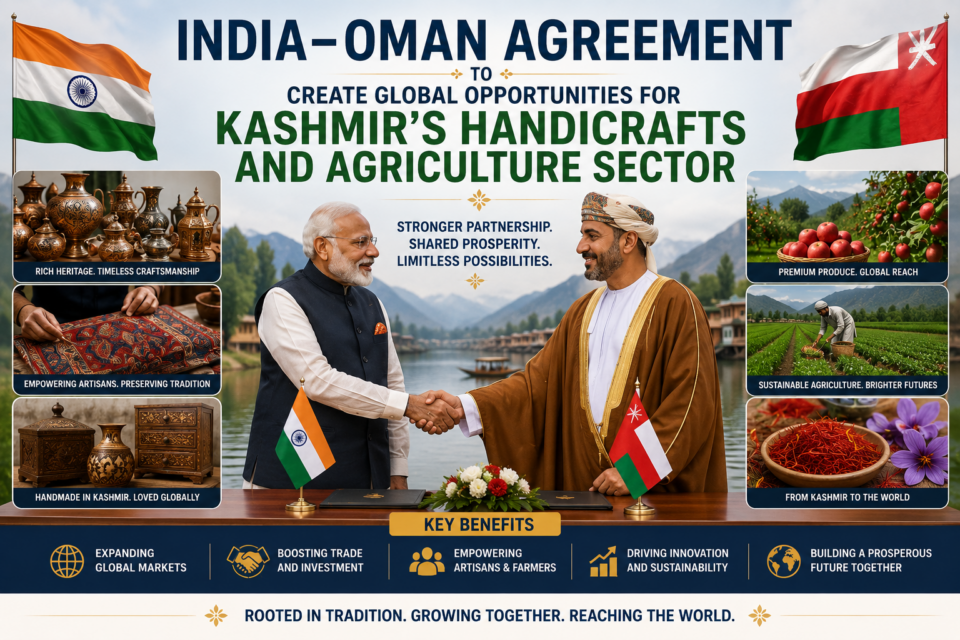
Kashmir’s export sector, particularly handicrafts and agricultural products, is expected to benefit from the India-Oman Comprehensive Economic Partnership Agreement (CEPA), which is set to come into force from June 1 and is likely to improve market access, reduce tariff barriers and enhance competitiveness for Indian goods in Oman.
Industry stakeholders in Kashmir said the agreement could create fresh opportunities for exporters in the Valley, especially in sectors such as handicrafts, hand-knotted carpets, papier-mâché products, shawls, dry fruits and horticulture-based products that already enjoy a market presence in Gulf countries, including Oman.
President of the Kashmir Chamber of Commerce and Industry (KCCI), Javid Ahmad Tenga, said a significant portion of Kashmir’s exports already reach Oman and described the agreement as a positive development for the Valley’s trade ecosystem.
“A significant share of Kashmir’s exports is already going to Oman, and this agreement is a good sign for exporters. It can improve opportunities for handicrafts and other products from Kashmir by making trade easier and more competitive,” Tenga said.The India-Oman CEPA, to be formally announced by both countries on Monday, will provide India with 100 per cent duty-free market access covering 98.08 per cent of Oman’s tariff lines and 99.38 per cent of trade value, substantially improving price competitiveness for Indian exports.
Trade experts believe the agreement could be particularly beneficial for Kashmir’s labour-intensive sectors, including handicrafts, handloom and processed agricultural products, which depend heavily on overseas demand and price competitiveness.
Under the agreement, key Indian export sectors expected to gain include textiles, agricultural goods, processed food, gems and jewellery, transport equipment and precision instruments, while additional opportunities are expected in chemicals, machinery, minerals, plastics, paper, marble and glass products.All zero-duty concessions will come into effect from the first day of implementation.
The pact also offers duty-free access to several food and agricultural products and is expected to improve India’s competitiveness in markets where goods currently attract tariffs of around five per cent.
According to official trade details, bilateral trade between India and Oman stood at USD 11.18 billion during 2025–26, with Indian exports valued at USD 4.02 billion, reflecting growing economic engagement between the two countries. Oman is India’s third- largest export destination among Gulf Cooperation Council (GCC) nations and serves as a strategic gateway to wider Middle Eastern and African markets.
Tenga said the agreement could help Kashmir exporters expand their footprint in Gulf markets if supported by better logistics, branding and market outreach.“Kashmir handicrafts and exports have demand abroad, particularly in Gulf countries. Agreements like these improve confidence among exporters and can help increase market access,” he said.
Industry stakeholders, however, said long-term benefits for Kashmir would depend on strengthening export infrastructure, improving freight connectivity and ensuring that small exporters are able to take advantage of new trade opportunities emerging under the India-Oman CEPA.
