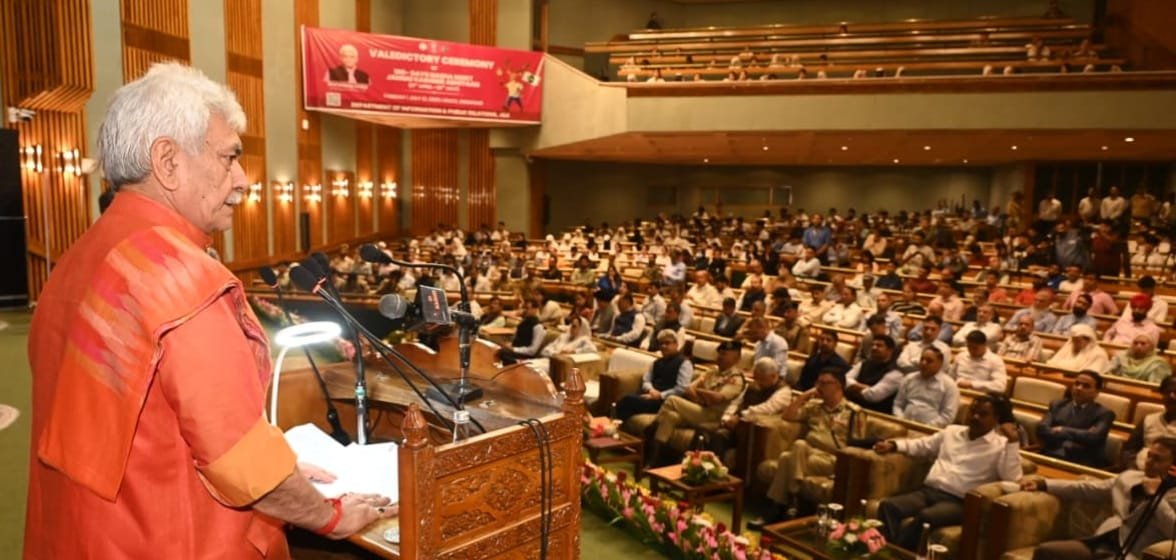
Lieutenant Governor Shri Manoj Sinha on Tuesday reiterated the Jammu and Kashmir Administration’s unwavering commitment to eliminating drug abuse and dismantling narco-terror networks while addressing a special event organised by the Department of Social Welfare to mark the successful completion of 100 days of the ‘Drug-Free J&K Campaign.’ The Lieutenant Governor described the milestone as an important achievement in the Union Territory’s sustained battle against narcotics but emphasised that the mission is only entering its most critical phase.
Addressing government officials, law enforcement agencies, representatives of educational institutions, civil society organisations, healthcare professionals, and youth volunteers, the Lieutenant Governor said that the completion of the first 100 days represents significant progress in building a broad-based movement against drug abuse. However, he cautioned that the challenge remains formidable and called for continued collective efforts to completely eliminate the menace of drugs and narco-terrorism from Jammu and Kashmir.The Lieutenant Governor said the administration remains determined to neutralise the drug cartels and narco-terror networks that deliberately target young people and attempt to undermine the future of the Union Territory. He stressed that the government has adopted a comprehensive strategy that combines strict law enforcement with public awareness, community participation, and rehabilitation to ensure that every individual affected by drug addiction receives the opportunity to rebuild their life with dignity.
Speaking about the significance of the campaign, Shri Manoj Sinha observed that drug abuse is not merely a law-and-order issue but a social challenge that impacts families, educational institutions, communities, and the overall development of society. He noted that addiction destroys lives, weakens families, and diverts the nation’s youth from productive and meaningful pursuits. Therefore, he said, the fight against drugs requires the active participation of every citizen alongside government institutions.
The Lieutenant Governor underlined that the administration has adopted a multi-pronged approach to combat the menace. While law enforcement agencies continue to intensify action against traffickers, suppliers, and organised criminal networks, parallel efforts are being made to spread awareness about the harmful effects of substance abuse among students, youth, parents, and local communities. He said prevention remains as important as enforcement, and educating young people about the dangers of drugs is essential to building a resilient society.
Reaffirming the administration’s determination, Shri Manoj Sinha said that the government will continue strengthening its three key priorities—dismantling illicit drug trafficking ecosystems, enhancing public awareness, and providing robust rehabilitation and counselling services to individuals affected by addiction. These three pillars, he said, form the foundation of Jammu and Kashmir’s long-term strategy to create a drug-free society.The Lieutenant Governor highlighted that agencies are working in close coordination to identify and dismantle the networks involved in narcotics trafficking. He noted that narco-terrorism poses a serious threat to national security as proceeds from illegal drug trade are often used to finance activities aimed at destabilising peace and development. Eliminating these networks, he said, is therefore essential not only for safeguarding public health but also for ensuring lasting peace and security across Jammu and Kashmir.
He observed that the administration has adopted a zero-tolerance policy towards narcotics and those involved in the illegal trade. Law enforcement agencies have intensified surveillance, strengthened intelligence gathering, and launched coordinated operations against organised drug trafficking syndicates. The Lieutenant Governor appreciated the efforts of the police, security agencies, district administrations, and various departments that have worked tirelessly during the campaign to curb the spread of narcotics.
Alongside enforcement, the administration has focused on creating widespread awareness across urban and rural areas. Schools, colleges, universities, Panchayati Raj Institutions, youth clubs, self-help groups, religious organisations, and civil society institutions have actively participated in awareness programmes highlighting the devastating impact of drug addiction on individuals and families. The Lieutenant Governor noted that such initiatives have encouraged communities to become active partners in identifying vulnerable individuals and supporting preventive efforts.
The Department of Social Welfare has played a central role in coordinating awareness drives and community outreach programmes under the campaign. Through seminars, workshops, counselling sessions, educational campaigns, cultural events, and interactive programmes, the department has sought to educate citizens about the social, psychological, economic, and health consequences of substance abuse while encouraging people to seek timely help.
The Lieutenant Governor emphasised that rehabilitation remains one of the most important aspects of the campaign. He said individuals struggling with addiction require compassion, counselling, medical care, and sustained support to successfully return to normal life. Rehabilitation centres, counselling facilities, healthcare professionals, psychologists, and social workers have an essential role in ensuring that those affected receive appropriate treatment and opportunities for reintegration into society.
He stressed that addiction should never be viewed solely through the lens of punishment, particularly for those who genuinely wish to recover. Instead, society must create an environment where recovering individuals receive encouragement, acceptance, and opportunities to rebuild their lives through education, employment, and community support.
The Lieutenant Governor also highlighted the critical role of families in preventing substance abuse. Parents, guardians, teachers, and community elders, he said, must remain vigilant and maintain open communication with young people to identify early signs of addiction and provide timely intervention. Strong family bonds, moral guidance, and emotional support remain among the most effective safeguards against substance abuse.
Addressing the youth directly, Shri Manoj Sinha urged them to reject drugs and embrace education, sports, innovation, entrepreneurship, and nation-building. He encouraged young people to become ambassadors of the Drug-Free J&K Campaign by spreading awareness among their peers and actively contributing to the creation of healthier and safer communities. The future of Jammu and Kashmir, he said, depends upon a confident, educated, skilled, and drug-free youth population.
