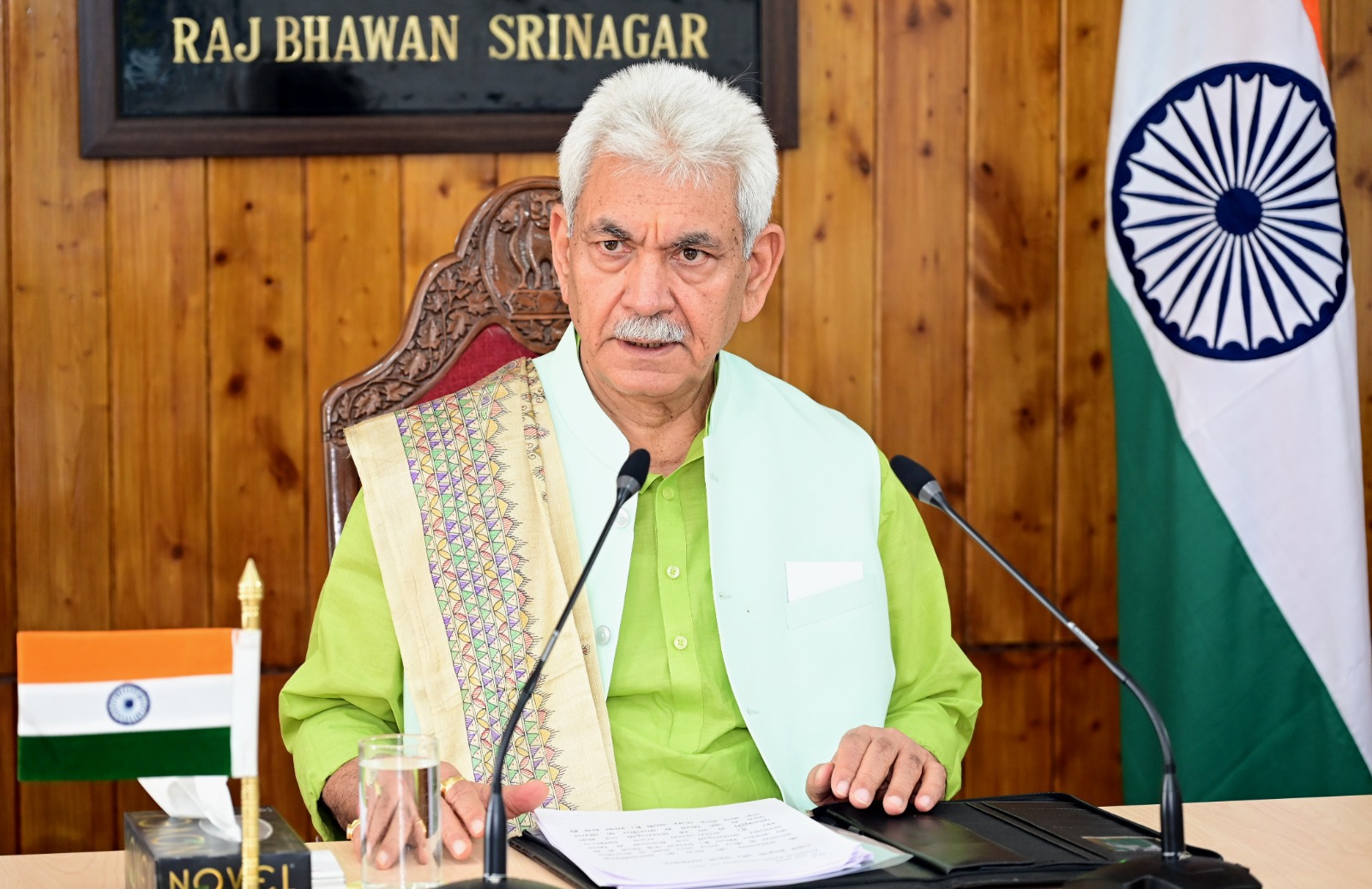
Lieutenant Governor Manoj Sinha felicitated officers of the Shri Amarnath Ji Shrine Board, Civil Administration, Army, Central Armed Police Forces, Jammu and Kashmir Police, Border Roads Organisation, medical professionals, service providers, and other stakeholders for the successful conduct of Shri Amarnath Ji Yatra-2026. He said the pilgrimage was a celebration of the collective resolve that transformed hardships into duty, challenges into opportunities, and service into a form of spiritual practice.
Gratitude for “Team Jammu Kashmir”
Addressing the gathering, the Lieutenant Governor expressed gratitude to officers, security personnel, sanitation workers, pony operators, pithu bearers, palanquin carriers, langar volunteers, and medical staff who ensured a smooth, secure, and dignified Yatra despite difficult terrain and adverse weather conditions. He said the achievement was not the success of any single institution or department, but of “Team Jammu Kashmir” as a whole.The felicitation ceremony, held in Srinagar, brought together representatives from across the various departments and organisations that had contributed to the Yatra’s successful conduct, providing an opportunity for the administration to formally recognise their collective effort over the course of the nearly two-month-long pilgrimage.
Yatra by the Numbers
The holy Yatra was conducted over 57 days, from July 3 to August 28, 2026. Adverse weather posed serious challenges for more than ten days, yet approximately 4.80 lakh devotees had darshan of Baba Barfani. Officials noted that 82 percent of pilgrims completed darshan within the first 20 days, while 95 percent did so within the first month.
A total of 54,000 service providers were registered for the Yatra, including 31,000 pony operators, pithu bearers, and palanquin carriers, 6,400 tent and shop operators, and 7,700 langar volunteers. Around 1.87 lakh pilgrims availed of palanquin and pony services during the pilgrimage.
On the healthcare front, 93 medical facilities were set up along the route, comprising 595 clinical beds and 26 oxygen booths, with 1,430 doctors and nursing personnel on round-the-clock duty, supported by 48 ambulances. As part of a zero-waste Yatra initiative, 7,900 toilets were installed and maintained by an equal number of sanitation workers.
Officials said holding capacity was raised to 63,000 within the Yatra area and 54,000 across the Jammu and Kashmir divisions, while Aadhaar-based registration helped address the challenge of duplicate registrations. Real-time monitoring was ensured through twice-daily coordination meetings, held at 3 a.m. and 8 p.m., led by Dr Mandeep K. Bhandari, CEO of the Shrine Board and Principal Secretary to the Lieutenant Governor, along with nodal officers, police, Divisional Commissioners, and camp officers.
A Reflection of Sanatan Tradition
The Lieutenant Governor said the sacred Yatra reflects India’s Sanatan tradition and its ethos of humanity, coexistence, and collective service. He noted that pilgrims from across the country returned home carrying not just a religious experience, but also the message of the region’s culture and hospitality.
He thanked civil society groups, political parties, and religious leaders who provided support to the Yatra, and reaffirmed that the discipline, energy, and coordination shown during the pilgrimage should now become an enduring part of Jammu and Kashmir’s development ethos going forward.
“No Goal Remains Impossible”
“I am confident that every citizen of Jammu Kashmir fulfilled their moral responsibility towards this Yatra, directly or indirectly, and elevated the rich cultural tradition of the UT before the entire country,” the Lieutenant Governor said.
He added, “The sacred yatra of Baba Barfani has placed a clear inspiration before all stakeholders and the public that work is accomplished not by wishes alone, but by sustained effort. Through your own efforts, you have demonstrated that when resolve is collective, leadership is clear, arrangements are robust, and the sp
