The year 2025 emerged as a watershed for railway development in Jammu and Kashmir, marked by major advances in passenger connectivity, freight logistics and strategic infrastructure expansion.
From the rollout of new Vande Bharat Express services to the launch of dedicated parcel and freight trains for horticulture and industry, the railways increasingly established themselves as a reliable, all-weather lifeline for the Union Territory.
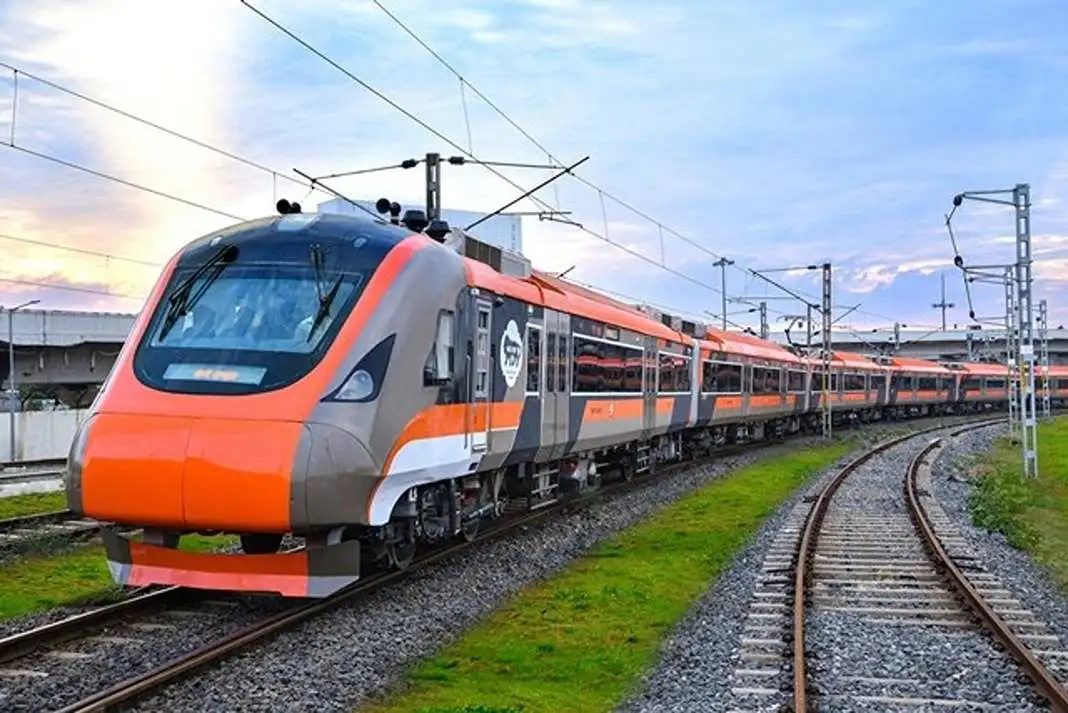
One of the year’s key passenger milestones was the launch of the Vande Bharat Express between Shri Mata Vaishno Devi Katra and Delhi on August 10, virtually flagged off by Prime Minister Narendra Modi. Operating via Jammu, Pathankot and Jalandhar, the semi-high-speed service significantly reduced travel time for pilgrims and commuters, while strengthening rail connectivity between Jammu and Kashmir and Punjab.
Railway officials said the service is part of a broader roadmap to eventually extend Vande Bharat operations towards the Kashmir Valley after completion of the remaining sections of the Udhampur–Srinagar–Baramulla Rail Link (USBRL).
While passenger services remained in focus, freight and parcel transportation emerged as the defining success story of 2025.
In a first, cherries from Jammu and Kashmir were cleared for transport to Mumbai by rail, with the inaugural shipment departing on June 3. The parcel van carrying 24 tonnes of cherries from Shri Mata Vaishno Devi Katra to Bandra, Mumbai, completed the journey in about 30 hours, offering growers a faster and safer alternative to road transport. Fruit growers’ associations termed the move a breakthrough for perishable cargo, particularly during the short cherry harvesting season.
The railways’ role in safeguarding Kashmir’s horticulture sector became even more pronounced during the apple harvest. On September 15, the Joint Parcel Product–Rapid Cargo Service (JPP-RCS) between Budgam and Adarsh Nagar, Delhi, was jointly flagged off by Lieutenant Governor Manoj Sinha and Chief Minister Omar Abdullah.
The daily service was launched amid prolonged closures of the Jammu–Srinagar National Highway due to heavy rainfall and landslides. Within just two weeks, more than 6,400 tonnes of apples were transported to Delhi by rail, helping growers avert heavy losses and ensuring timely supply to national markets.
Railway officials said consignments were reaching Delhi within 23 hours, sharply reducing spoilage and transportation costs. Encouraged by the response, full-rake parcel operations were later started from Sopore and Baramulla railway stations, further strengthening freight capacity in north Kashmir.
Freight diversification continued in October, when the first freight train carrying industrial salt from Gujarat reached the Anantnag Goods Shed. The 21-wagon BCN rake, carrying 1,350 tonnes of industrial salt, marked a major milestone in bulk commodity movement into the Valley by rail.
Officials said the development would ensure uninterrupted supplies to local industries such as tanning, soap manufacturing and brick kilns, while reducing dependence on weather-prone road links.
On the infrastructure front, September saw the Ministry of Railways approve two major projects, a new 40.2-km Baramulla–Uri broad-gauge line and doubling of the 73.5-km Qazigund–Budgam section. Officials said the Baramulla–Uri line would provide all-weather connectivity to a strategically important border region near the Line of Control and also boost tourism in Uri.
The Qazigund–Budgam doubling, designated under the Hill and Strategic Corridor, is expected to enhance capacity, reduce delays, and facilitate smoother movement of passenger, freight and military special trains.
With the commissioning of the Katra–Banihal section in 2025, officials said the Kashmir rail corridor is set to be fully integrated with the national railway network, unlocking new potential for trade, tourism and strategic mobility.
By the end of November, railway officials described 2025 as a turning point, with rail transport firmly established as a dependable alternative for both passengers and freight in Jammu and Kashmir.
