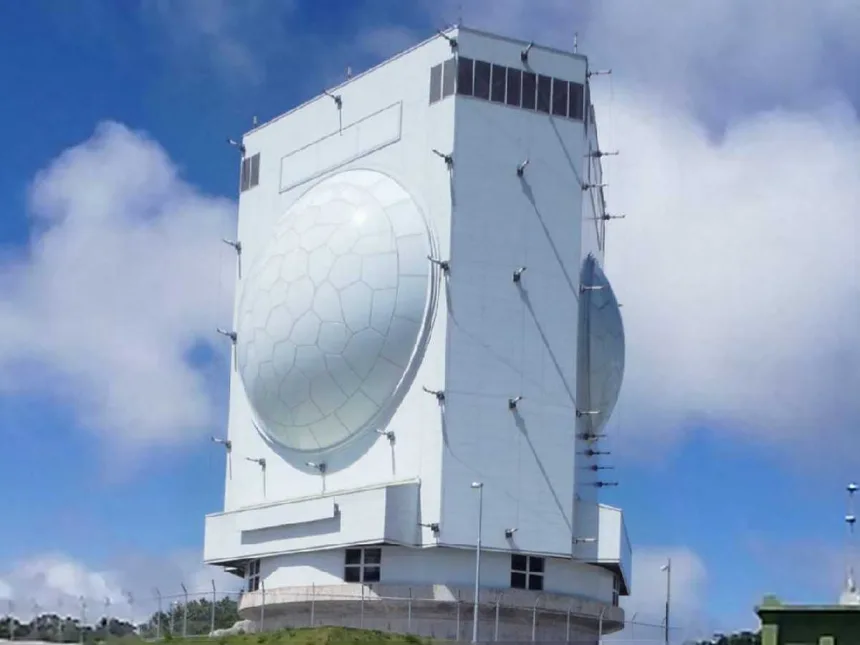
Jammu and Kashmir is moving towards adopting advanced early warning systems (EWS) similar to Japan’s model to better predict and manage natural disasters such as cloudbursts, flash floods, and landslides. The Meteorological Department plans to install five new Doppler weather radars across the Union Territory in the coming months, significantly enhancing forecasting capabilities and speeding up alert dissemination.
Dr. Mukhtar Ahmed, Director of the Meteorological Department Srinagar, said, “We are expanding our early warning network by adding more radars to predict flash floods and cloudbursts and quickly spread alerts via social media and SMS. Srinagar and Banihal already have radars, and new ones will be set up in South Kashmir, North Kashmir, Chenab Valley, and Pir Panjal, totaling five radars soon. This will help provide timely alerts about heavy rainfall and other hazards.”
Early warning systems combine sophisticated technology and processes to detect potential hazards like floods, landslides, and earthquakes, providing actionable alerts to communities and authorities. Notable examples include Japan’s AMeDAS, the US-based FEWS NET for famine, flood monitoring systems in Nepal, and landslide forecasting in India (LANDSLIP). These systems use combinations of weather satellites, ground sensors, radar, IoT devices, and machine learning for real-time data analysis and forecast.
Japan, however, stands out as a global leader in early warning systems, integrating advanced technology, institutional frameworks, and community engagement at all levels. The Japanese model leverages supercomputers, sensor networks, and smartphone apps for timely forecasting of typhoons, earthquakes, and torrential rains.
Speaking to Rising Kashmir, Faizan Arif, an independent weather forecaster, said that for J&K, a multi-hazard, community-based model should be adopted – mirroring Japan’s three-pronged strategy of technological innovation, institutional strength, and local engagement.
“We can combine environmental sensors, satellite data, and AI-driven forecasting for floods, glacial lake outburst floods (GLOFs), landslides, and cloudbursts. Integration of local field monitoring (such as rain gauges and landslide sensors), plus robust communication channels (SMS, loudspeakers, apps in local languages), will ensure wide reach, especially to remote and vulnerable communities,” Arif said.
“In Kashmir specifically, the Irrigation & Flood Control (I&FC) Department has introduced automatic Water Level Recorders and a Kashmir Flood Alert App, providing real-time readings of Jhelum River and its tributaries, issuing warnings when thresholds are crossed. While a step forward, its scope is currently confined to only some parts of Kashmir valley, lacks redundancy in case sensors fail or exceed critical levels, and does not cover other vulnerable parts of J&K. Extending this system across the wider region, integrating it with national platforms like SACHET, and ensuring alerts are actionable at the community level would greatly improve reliability,” Arif added.
He further said that modern Early Warning Systems can indeed detect the precursors to cloudbursts (partly) and landslides, but with certain limitations. “Cloudburst prediction is being improved by using machine learning algorithms, real-time atmospheric data, and radar/satellite images, which can identify critical conditions like rapid humidity increase and unstable air masses, but it is still in the developmental stage. No big success regarding this has been yet achieved,” he said. “Landslide Early Warning Systems use rain thresholds, soil moisture sensors, and IoT-based ground movement detectors to trigger alerts if danger levels are exceeded. While forecasts are not always 100 percent precise due to local microclimates, advances in technology now provide vital minutes or hours of warning that can make a difference in saving lives.”
He said that to install such systems in J&K, several steps are crucial and highly implementable. “First, comprehensive risk mapping of susceptible regions should be performed. Next, deploy a mix of ground-based sensors (for rainfall, soil moisture, river flow), increase in the number of weather stations, and satellite monitoring for sensitivity in the Himalayan terrain,” Arif said, adding that “Establish emergency dissemination infrastructure – sirens, community loudspeakers, and SMS alert networks – backed by reliable power redundancy. Collaboration between universities, research centres, and private tech firms is essential for continual improvement and staff training. Most importantly, awareness campaigns and regular community drills will ensure not only installation but sustained effectiveness and local trust.”
A climate expert at the University of Kashmir welcomed the upcoming radar installations but stressed that preparedness must go beyond technology. “The effectiveness of radars depends on how well warnings reach communities and prompt action. Regular drills, coordination with local disaster management agencies, and fostering public trust are crucial for resilience,” the expert said.
