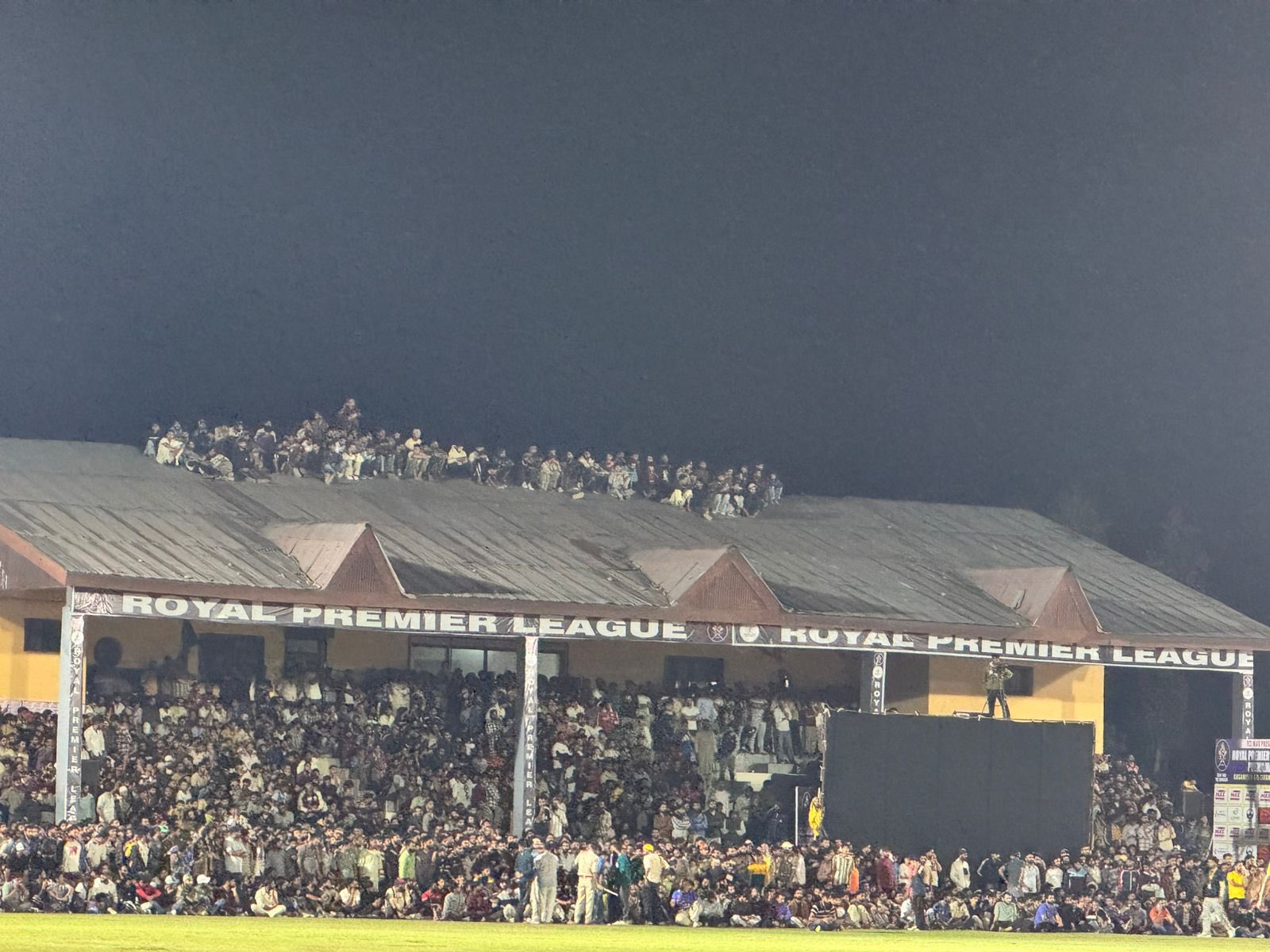
In recent days, two very different pictures have emerged from either side of the Line of Control. In Jammu and Kashmir, young people are staying out late, floodlit stadiums are hosting night cricket tournaments, and thousands of families are turning up past midnight to cheer for their local teams. The return of sporting life after dark in places like Pulwama is being seen as a symbolic reclaiming of nights once lost to fear and curfew. Social media posts, like one by Fatima Dar, captured the atmosphere of hope and normalcy, with youth celebrating the freedom to gather and play under lights instead of silence. Local leaders too have hailed the shift, describing it as a transformation where “guns and stones of yesterday have been replaced with bats and balls today.”
Two Kashmir Two different fates
Pic 1: Kashmir 🇮🇳, the people in thousands gathered to enjoy a day- night cricket match, first of its kind,in Pulwama
Pic 2: Pák occupied Kashmir, the people in thousands gathered to demand basic life necessities like electricity & flour,&… pic.twitter.com/4PiHmGBtDM
— Fatima Dar (@FatimaDar_jk) September 30, 2025
The buzz around these tournaments reflects more than just sport. It signals a new confidence in public spaces, investments in civic infrastructure, and the possibility of building lasting community traditions. Matches are being livestreamed, pitches upgraded, and lights rented to keep the games going well into the night. While challenges remain—such as ensuring continuity, broadening access to girls and rural youth, and avoiding over-regulation—the optimism is undeniable. Pulwama, once a name tied to tragedy, is today resonating with the sounds of bat hitting ball and the roar of young crowds long after sunset.
Across the border in Pakistan-occupied Jammu and Kashmir (PoJK), however, the situation could not be more different. There, residents have poured into the streets, not to celebrate, but to protest. Demonstrations have spread across Muzaffarabad, Mirpur, Kotli and Dadyal, with protesters demanding cheaper electricity, subsidised flour, better healthcare and education, and the removal of reserved legislative seats they see as imposed and unrepresentative. The rallies have been led by the Jammu Kashmir Joint Awami Action Committee, which has presented a 38-point charter of demands highlighting years of neglect and economic hardship.
Instead of dialogue, protesters have been met with force. Reports confirm that Pakistani rangers opened fire on demonstrators in Muzaffarabad, leaving several dead and many injured. Internet services have been cut, bridges sealed, and entire towns paralysed under shutdowns. In Dadyal, anger ran so high that residents refused to bury a protester killed in firing until their demands were addressed. Social media clips, like those shared by activist Zubair Ahmed, show chaos, shuttered markets, and people facing barricades just to access hospitals. For many in PoJK, the protests are not a political choice but a fight for survival, a desperate attempt to draw attention to the denial of basic necessities.
The contrast between the two regions is striking. On one side, Jammu and Kashmir is tentatively rediscovering civic joy, where sport becomes a vehicle for unity and hope. On the other, PoJK is burning with discontent, where even the call for flour and electricity is met with repression. It underscores a larger truth: that societies flourish when their youth are given the space to express themselves and live normally, and they fracture when citizens are denied even the minimum conditions of dignity.
As Kashmiris on one side light up their nights with cricket, their counterparts across the Line of Control continue to march by day, demanding bread, power and justice. It is a tale of two realities, both unfolding under the same mountains but separated by governance, opportunity, and the state’s willingness—or refusal—to listen.
